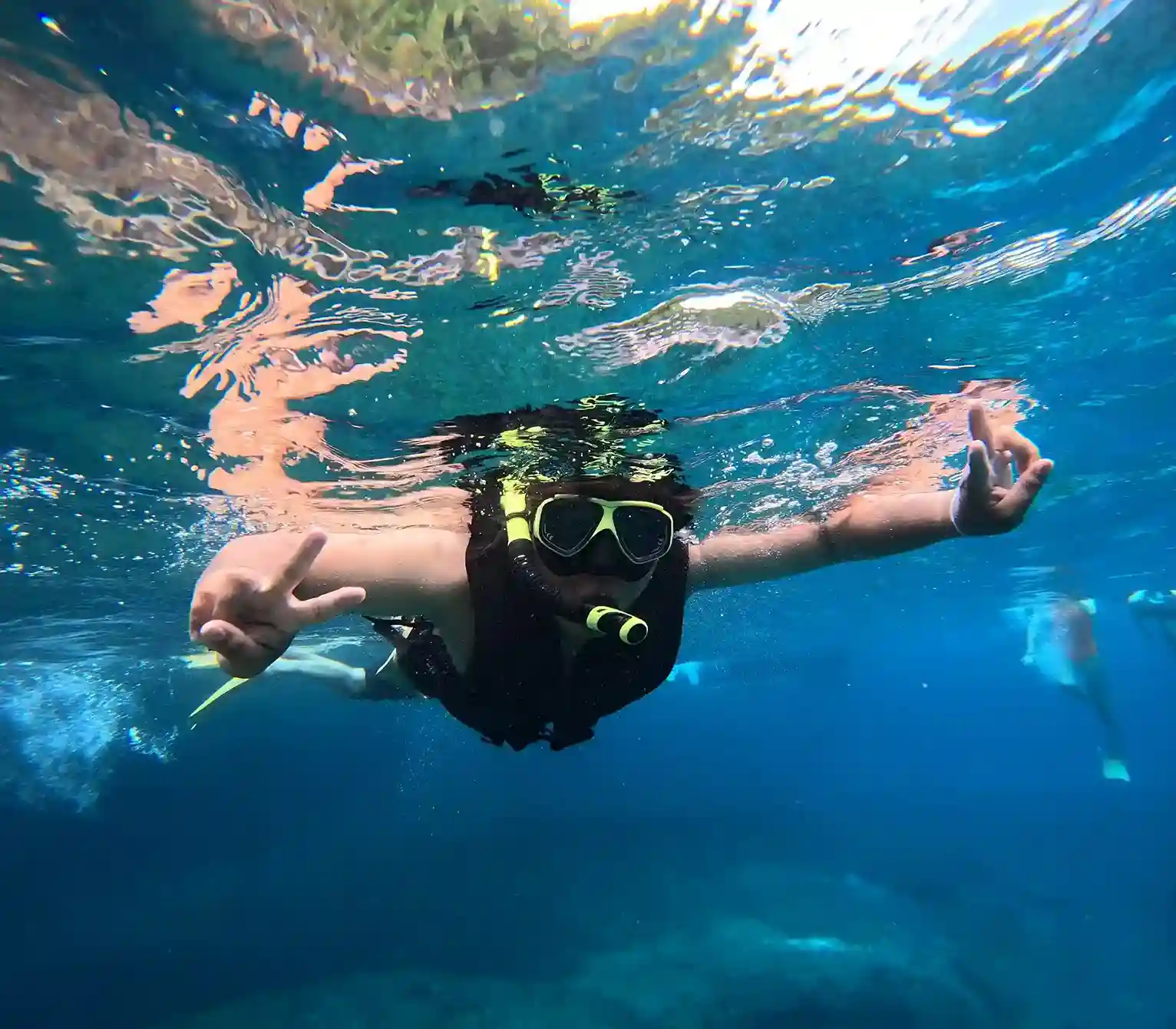
Planning your underwater adventure in Bali? Discover the critical differences between Manta Bay and Manta Point, backed by marine biology insights and real sighting data to help you choose the perfect manta ray encounter.

Nusa Penida has earned its reputation as Indonesia’s premier manta ray destination, attracting over 150,000 marine enthusiasts annually
. Yet first-time visitors face a crucial decision: Manta Bay or Manta Point? While both locations promise encounters with these gentle giants, the experiences diverge dramatically based on your skill level, comfort with ocean conditions, and what you hope to witness.
This comprehensive comparison draws from marine survey data, dive operator statistics, and conservation research to give you actionable insights that travel blogs simply don’t provide.
Situated on Nusa Penida’s southwestern coast near Broken Beach, Manta Bay features a protected cove with depths ranging from 5 to 12 meters
. The bay’s topography creates a natural shelter from strong currents, resulting in visibility typically between 10-15 meters during dry season.
Key Characteristics:
Manta Bay serves as a feeding aggregation site where reef manta rays (Mobula alfredi) circle near the surface to filter plankton. This behavior makes them accessible to snorkelers, often swimming within 2-3 meters of the surface
Sighting Probability: Marine surveys indicate a 10-15% daily encounter rate at Manta Bay, with peak activity during morning hours (7:00-10:00 AM) when tidal currents concentrate plankton
Ideal For:
Located on the exposed southern coast, Manta Point sits at the convergence of the Indian Ocean and Bali Sea currents. This cleaning station sits in 12-18 meter depths with open-water exposure
.
Key Characteristics:
Unlike Manta Bay’s feeding behavior, Manta Point functions as a cleaning station where both reef mantas and the larger oceanic manta rays (Mobula birostris) visit to have parasites removed by cleaner wrasse. This ecological distinction means:
Sighting Probability:85-90% daily encounter rate with an average of 8-12 individual mantas present during peak season
. Oceanic mantas here can reach wingspans of 4-6 meters—nearly double the size of reef mantas at Manta Bay.
Ideal For:
| Factor | Manta Bay | Manta Point | Winner |
|---|---|---|---|
| Sighting Reliability | 10-15% chance | 85-90% chance | 🏆 Manta Point |
| Manta Size | 2-3m wingspan | 4-6m wingspan | 🏆 Manta Point |
| Beginner Safety | Excellent | Moderate | 🏆 Manta Bay |
| Snorkeling Quality | Excellent | Limited | 🏆 Manta Bay |
| Photography Opportunities | Good (surface light) | Excellent (clear deep water) | 🏆 Manta Point |
| Physical Exertion | Low | High | 🏆 Manta Bay |
| Weather Dependency | Low | High | 🏆 Manta Bay |
Pro Tip: Book a combo tour (available through reputable operators) that attempts Manta Point first, with Manta Bay as the fallback—maximizing your encounter probability to nearly 95%
For Manta Bay:
For Manta Point:
Both locations fall within the Nusa Penida Marine Protected Area (MPA). Follow these non-negotiable guidelines:
Violation can result in 1 million IDR fines and tour operator blacklisting
| Package Type | Manta Bay Only | Manta Point Only | Combo Tour |
|---|---|---|---|
| Group Tour (6-8 pax) | IDR 350,000 | IDR 450,000 | IDR 600,000 |
| Private Tour (2 pax) | IDR 1,500,000 | IDR 2,500,000 | IDR 3,000,000 |
| Diving (2 dives) | N/A | IDR 1,800,000 | IDR 2,200,000 |
Prices include equipment, guide, boat transfer, and lunch. Excludes Nusa Penida fast boat from Bali (IDR 150,000-300,000 return).
Choose Manta Bay If:
Choose Manta Point If:
The Hybrid Approach: Smart travelers book 2-3 days on Nusa Penida, attempting Manta Point on day one (when energy is high) and using Manta Bay as a relaxed backup or second-day activity.
Q: Can I see mantas at both locations in one day? A: Yes, combo tours operate daily during dry season, spending 45 minutes at each site. Total trip duration: 6-7 hours including transfers.
Q: Is Manta Point safe for strong swimmers who aren’t divers? A: Conditionally yes—if you’re comfortable in open ocean with currents. However, you’ll miss the cleaning station action at 12m+ depths where mantas congregate.
Q: What’s the best time of day for sightings? A: Morning (7:00-9:00 AM) when tidal currents bring plankton to Manta Bay and trigger cleaning activity at Manta Point.
Q: Are there any age restrictions? A: Manta Bay accepts ages 8+; Manta Point requires 12+ for snorkeling and dive certification for scuba.
Q: What marine life besides mantas can I expect? A: Manta Bay: tropical fish, coral gardens, occasional turtle. Manta Point: reef sharks, eagle rays, tuna schools, and vibrant coral walls.
The Manta Bay vs Manta Point debate ultimately hinges on your adventure appetite and skill level. Manta Bay offers accessibility and safety with modest encounter odds, while Manta Point delivers near-guaranteed, spectacular encounters for those prepared to work for them. For the complete Nusa Penida experience, structure your itinerary to experience both—the gentle introduction at Manta Bay, then the oceanic spectacle at Manta Point.
Ready to plan your manta ray adventure? Book with MPA-certified operators who prioritize marine conservation alongside guest safety.
Keep Reading
Nusa Penida, an island paradise nestled southeast of Bali, has long captivated travelers with its...
Nusa Penida has rapidly ascended the ranks of global travel bucket lists, and if there...
Manta Point Nusa Penida is one of the most iconic snorkeling destinations in Bali, renowned...