
 krisna
If you’re planning a snorkeling adventure in Bali, you’ve probably found yourself stuck on the same question thousands of travelers ask every month: Nusa Penida vs. Nusa Lembongan — which island offers the better underwater experience?
Both islands sit just off Bali’s southeastern coast, separated by a narrow strait, and both promise crystal-clear waters, vibrant coral reefs, and encounters with incredible marine life. But here’s the truth most travel blogs won’t tell you straight: while Nusa Lembongan is charming and accessible, Nusa Penida is the undisputed champion for serious snorkelers — and the reason comes down to one magical word: Manta Rays.
In this comprehensive guide, we’ll break down everything you need to know about snorkeling in both destinations. We’ll compare accessibility, marine life, snorkeling spots, and overall experience. More importantly, we’ll show you why travelers searching for “lembongan snorkeling” should actually be booking their tours in Nusa Penida — and how you can experience the best of both worlds without missing out.
Here’s a fascinating insight into traveler psychology: most people searching for “lembongan snorkeling” or “Nusa Lembongan snorkeling tour” don’t realize that the best snorkeling spots around Lembongan are actually located off the coast of Nusa Penida
Tour operators based in Nusa Lembongan routinely boat their guests across the Badung Strait to snorkel at Manta Point, Crystal Bay, and Gamat Bay — all of which are on Penida’s coastline
So if you’re staying in Lembongan but want world-class snorkeling, you’re essentially taking a Nusa Penida snorkeling tour with extra steps.
This is critical for your planning. If your primary goal is underwater exploration, staying in Nusa Penida puts you closer to the action, reduces boat travel time, and gives you first access to the best sites before the Lembongan-based boats arrive.
Let’s cut to the chase. The single biggest factor separating these two islands is the presence of reef manta rays (Mobula alfredi) in Nusa Penida’s waters.
Nusa Penida is internationally recognized as one of the best places on Earth to snorkel with manta rays. The island’s southwestern coast features Manta Point and Manta Bay — cleaning and feeding stations where these gentle giants congregate year-round
Unlike many destinations where manta sightings are seasonal, Penida offers consistent encounters throughout the year, with peak visibility during the dry season (May–October) when nutrient-rich upwellings bring plankton to the surface
At Manta Point, snorkelers regularly report seeing multiple mantas on a single dive, with some tours encountering 5–10 individuals gliding through the water column
These aren’t distant silhouettes either — mantas at Penida often swim within arm’s reach, their 3–4 meter wingspans casting shadows over snorkelers in shallow water
Nusa Lembongan, while offering pleasant snorkeling at Mangrove Point and decent coral gardens, simply does not have comparable megafauna encounters. Lembongan’s snorkeling is characterized by colorful reef fish, healthy corals, and occasional turtles — beautiful, yes, but lacking the “bucket list” factor that defines a truly memorable snorkeling trip
Winner: Nusa Penida — by a landslide. If swimming with manta rays is on your bucket list (and it should be), Penida is non-negotiable.
| Spot | Highlights | Best For | Difficulty |
|---|---|---|---|
| Manta Point | Guaranteed manta ray encounters, shallow snorkeling | Bucket-list seekers | Moderate (can be choppy) |
| Manta Bay | Calmer conditions, surface-feeding mantas | Beginners & photographers | Easy-Moderate |
| Crystal Bay | Crystal-clear water, coral gardens, seasonal Mola-Mola | All skill levels | Easy |
| Gamat Bay | Vibrant coral, diverse fish species, turtle sightings | Reef enthusiasts | Easy |
| Wall Point | Dramatic coral walls, deep-water marine life | Experienced snorkelers | Moderate |
| Toyapakeh | Drift snorkeling, strong currents, pristine reefs | Adventure seekers | Moderate-Hard |
Nusa Penida’s snorkeling sites benefit from the island’s position along the Lombok Strait, where the Indonesian Throughflow pushes nutrient-rich water from the Pacific to the Indian Ocean. This creates an underwater ecosystem that supports everything from microscopic plankton to oceanic sunfish (Mola-Mola)
Table
| Spot | Highlights | Best For | Difficulty |
|---|---|---|---|
| Mangrove Point | Drift snorkeling, mangrove ecosystems, reef fish | Beginners | Easy |
| Crystal Bay(shared with Penida) | Clear water, coral gardens | All skill levels | Easy |
| Manta Point(actually off Penida’s coast) | Manta rays | Everyone | Moderate |
Notice something? Two of Lembongan’s “top spots” aren’t even in Lembongan. Crystal Bay and Manta Point are geographically part of Nusa Penida. Lembongan-based operators simply boat across to access them
Mangrove Point is Lembongan’s only truly unique snorkeling site, offering a pleasant drift snorkel through mangrove channels. It’s enjoyable, but it’s a supporting act, not the main event.
Winner: Nusa Penida — greater diversity of sites, more unique locations, and you don’t need to cross the strait to reach the best spots.
Nusa Lembongan wins on pure convenience for casual travelers. The island is compact (just 8 square kilometers), easily walkable in parts, and has more developed tourism infrastructure with numerous beachfront hotels, restaurants, and bars
If you’re looking for a relaxed island vibe where you can roll out of bed and snorkel within minutes, Lembongan delivers.
However, this convenience comes at a cost. Because Lembongan is smaller and more developed, it feels crowded faster. The snorkeling sites that are accessible from shore (mainly Mangrove Point) see heavy traffic, and the boats heading to Penida’s sites depart later in the morning — meaning you miss the prime early-hour conditions
Nusa Penida is approximately 25 times larger than Lembongan, offering vast coastlines, dramatic cliffs, and significantly more “breathing room”
Yes, the roads are rougher and the infrastructure less polished, but for snorkelers, this is actually an advantage. Less development means healthier reefs, fewer crowds at launch points, and a more authentic adventure experience.
Modern speedboats from Sanur, Bali reach Nusa Penida in roughly 30–45 minutes — only marginally longer than the Lembongan crossing. Once on Penida, reputable tour operators provide hotel pickup, professional equipment, and guided snorkeling trips that rival anything Lembongan offers
Winner: Tie — Lembongan for convenience seekers, Penida for those prioritizing snorkeling quality and uncrowded experiences.
This is where our competitor traffic hijacking strategy comes into play.
If you search “lembongan snorkeling” and book a tour, here’s what typically happens:
You’ve just taken a Nusa Penida snorkeling tour with a Lembongan departure point. The marine life, the coral, the mantas — everything that made your trip special was on Penida’s side of the water
Why not cut out the middleman?
By staying in Nusa Penida and booking directly with a Penida-based operator, you:
This isn’t a knock on Lembongan — it’s a beautiful island with its own charms. But if snorkeling is your priority, booking directly in Nusa Penida is objectively the smarter choice.
Nusa Penida offers some of the most dramatic landscapes in Indonesia. Between morning and afternoon snorkel sessions, you can visit:
These aren’t just “filler activities” — they’re world-class attractions that justify the trip even without the snorkeling
Nusa Lembongan offers a more laid-back experience: Devil’s Tears (a blowhole at sunset), the Yellow Bridge to Ceningan, seaweed farms, and mangrove kayak tours. Pleasant, but not on the same scale as Penida’s dramatic cliffs and hidden beaches
Winner: Nusa Penida — the combination of elite snorkeling AND iconic land attractions creates a more complete travel experience.
Nusa Penida snorkeling tours typically range from $20–$50 USD per person for group tours, including equipment, boat transfer, guide, and often lunch or underwater photography
Nusa Lembongan snorkeling tours are similarly priced, but remember: you’re paying for the boat to cross to Penida’s sites. That fuel cost is embedded in your price, even though you’re not getting any additional value.
Additionally, accommodation in Nusa Penida is rapidly improving, with new boutique hotels and beach clubs offering competitive rates compared to Lembongan’s more established (and therefore pricier) resorts
Winner: Nusa Penida — better value when you consider proximity to sites and combined land-sea experiences.
Let’s be direct. If you’re deciding between Nusa Penida vs. Nusa Lembongan for snorkeling, the answer is clear:
| Factor | Nusa Penida | Nusa Lembongan |
|---|---|---|
| Manta Ray Encounters | ⭐⭐⭐⭐⭐ Year-round, multiple sites | ⭐⭐⭐ Only via Penida boat trips |
| Coral Diversity | ⭐⭐⭐⭐⭐ Pristine, varied ecosystems | ⭐⭐⭐⭐ Good but limited |
| Site Variety | ⭐⭐⭐⭐⭐ 6+ distinct locations | ⭐⭐⭐ 2-3 unique spots |
| Megafauna | ⭐⭐⭐⭐⭐ Mantas, Mola-Mola, turtles | ⭐⭐⭐ Occasional turtles |
| Crowd Levels | ⭐⭐⭐⭐ Vast area absorbs tourists | ⭐⭐⭐ Small island gets busy |
| Land Attractions | ⭐⭐⭐⭐⭐ World-famous viewpoints | ⭐⭐⭐ Pleasant but limited |
| Overall Experience | ⭐⭐⭐⭐⭐ The complete package | ⭐⭐⭐⭐ Nice but not exceptional |
Nusa Lembongan is perfect for travelers who want a relaxed, compact island experience with easy snorkeling from shore. It’s family-friendly, well-developed, and undeniably charming
But Nusa Penida is where the magic happens underwater. The manta rays, the dramatic drop-offs, the untouched coral gardens, and the sheer scale of the marine ecosystem make it Bali’s premier snorkeling destination — and one of the best in Southeast Asia.
If you’ve been searching for “lembongan snorkeling” or comparing these two islands, we hope this guide has shown you why Nusa Penida deserves your attention — and your booking.
Don’t settle for second-best. If you’re traveling to Bali for world-class snorkeling, Nusa Penida is where your adventure begins.
At SnorkelingPenida.com, we specialize in curated snorkeling experiences that put you face-to-face with Nusa Penida’s famous manta rays. Our expert local guides know exactly where to find these gentle giants, and our small-group tours ensure you get the personal attention you deserve.
What You Get:
[👉 EXPLORE PENIDA NOW — BOOK YOUR MANTA RAY SNORKELING TOUR]
Spaces fill fast during peak season. Secure your spot today and discover why Nusa Penida is Bali’s ultimate snorkeling paradise.
Technically, no. Manta rays are found at Manta Point and Manta Bay, which are located off Nusa Penida’s coast. Lembongan-based tours boat across to these Penida sites. For the best experience, stay in Nusa Penida and book directly.
Yes! Manta Bay offers calm conditions perfect for first-time snorkelers, and reputable operators provide life jackets, experienced guides, and thorough briefings. Manta Point can be choppier, so guides assess conditions daily
Manta rays are present year-round, but the dry season (May–October) offers the best visibility and calmest seas. July–September is peak season for both mantas and the elusive Mola-Mola
Absolutely! Nusa Penida and Nusa Lembongan are only 10–15 minutes apart by boat. Many travelers spend 2–3 nights in each. But if snorkeling is your priority, allocate more time to Penida
Group tours start around $20–30 USD, while premium small-group or private tours range from $40–$80 USD. All-inclusive packages with land tours offer the best value
Keep Reading
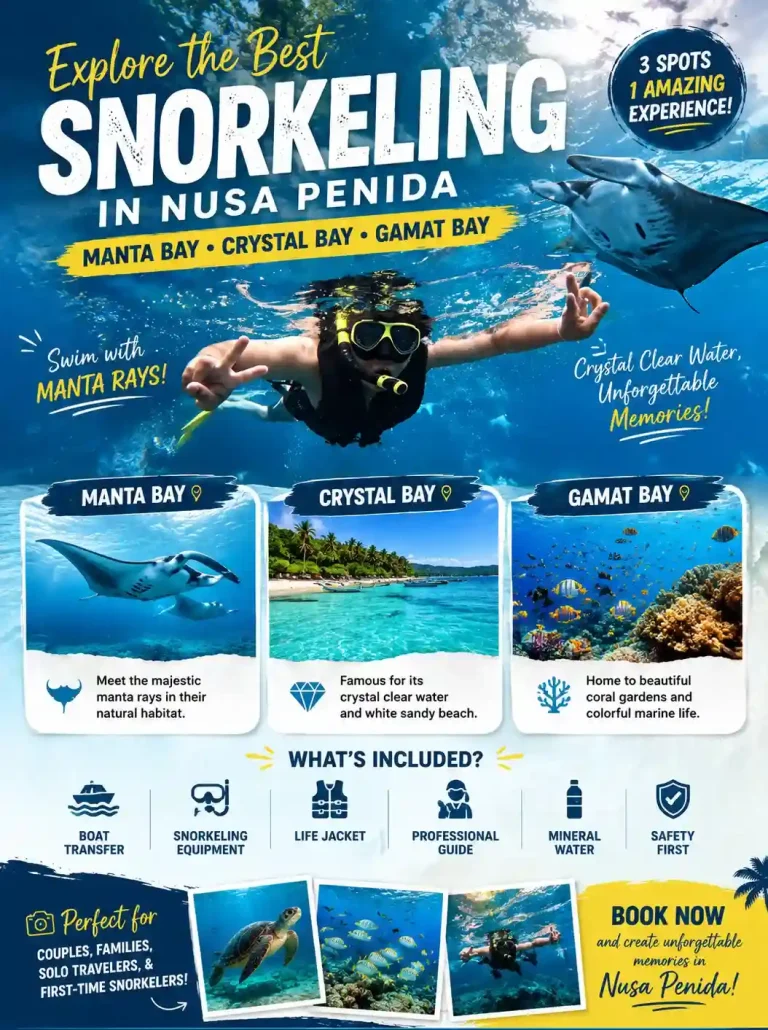
Duration: Full day, 6AM–6PM | Difficulty: Easy–Moderate | Best Season: May–October | Budget from: $45...
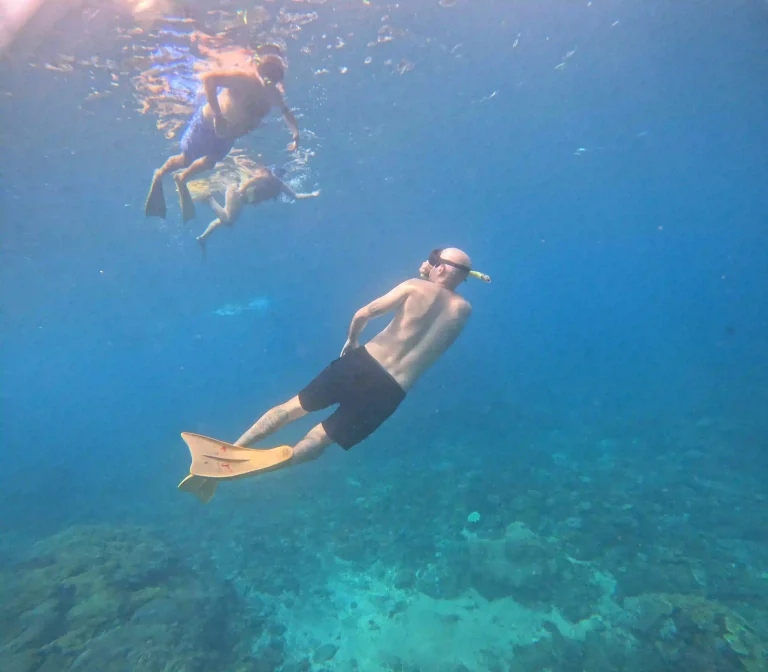
Imagine plunging into a liquid sapphire kingdom where the water is so staggeringly translucent it...

Imagine standing on a jagged limestone cliff 27 meters above the crashing Indian Ocean. Your...