
 krisna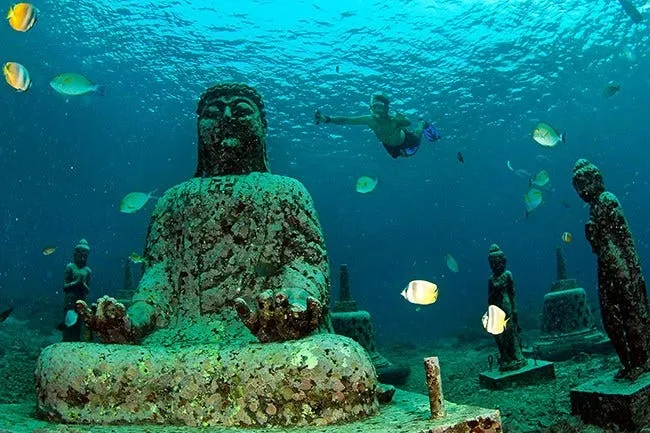
Nusa Penida is globally renowned for its dramatic cliffs and the legendary Manta Rays, but hidden beneath the surface of the Ceningan Channel lies one of the most surreal sights in Indonesia: the Underwater Buddha. Often referred to as Temple Point or Candi Belah, this man-made reef features an array of Buddha statues and stupas that look like an ancient sunken city swallowed by the ocean.
Whether you are an avid scuba diver or a casual snorkeler, visiting this site offers a spiritual and hauntingly beautiful experience that differs from any other spot in Bali. In this guide, we will dive deep into everything you need to know about visiting the Underwater Buddha Statue, from its history to the best ways to get there.
A common misconception among travelers is that these statues are ancient ruins from a lost civilization. In reality, the Underwater Buddha was intentionally submerged about two decades ago as part of an artificial reef project. The goal was twofold: to provide a new habitat for coral growth and marine life, and to create a unique attraction for the growing tourism industry in the Nusa islands.
Over the years, nature has claimed the statues. Soft corals, sponges, and anemones now coat the stone faces of the Buddha, creating a vibrant ecosystem. It is a perfect example of how man-made structures can harmonize with the marine environment, eventually becoming a part of the Nusa Penida snorkeling trips that travelers love today.
The statues are located in the channel between Nusa Ceningan and Nusa Penida. Specifically, they sit in an area known as the Ceningan Wall or Temple Point. Because of its location in the strait, the site is prone to strong currents, which is why having an experienced guide is non-negotiable.
Most visitors arrive via a boat departing from Banjar Nyuh or Toyapakeh. If you have followed our guide on how to get to Nusa Penida from Sanur, you will likely land at a harbor that is just a short 10-minute boat ride away from this mysterious site. The depth of the statues varies; the main Buddha sits at about 5 to 7 meters, making it accessible for snorkelers, while deeper stupas are located at 12 to 15 meters for scuba divers.
As you descend into the blue, the first thing you will notice is the silence and the imposing silhouette of the Buddha statues. The main attraction consists of a large sitting Buddha surrounded by several smaller statues and bell-shaped stupas, reminiscent of the famous Borobudur Temple in Java.
The marine life around the statues is incredibly diverse. You can expect to see schools of colorful reef fish, such as damselfish, butterflyfish, and the occasional moray eel hiding within the stone crevices. For those lucky enough, turtles often pass through this channel, adding a touch of magic to your private boat snorkeling tour. The contrast between the grey stone statues and the vibrant tropical fish creates a photographer’s paradise.
Visibility is the most important factor when visiting Temple Point. Because the site is located in a channel where the Indian Ocean meets the Bali Sea, the water clarity can change rapidly. The best time to visit is during the dry season, typically from April to October. During these months, visibility can reach up to 20 meters, allowing you to see the entire “temple” complex from the surface.
In terms of daily timing, morning is always best. Not only is the sea generally calmer, but the sunlight hits the water at an angle that beautifully illuminates the statues, which is essential for capturing high-quality underwater photos. If you are looking for more tips on timing, our best snorkeling spots guide covers the seasonal nuances of the region in detail.
One of the best things about the Underwater Buddha is its accessibility. Because the main statues are relatively shallow, snorkelers can get a great view of the Buddha’s head and upper body simply by floating on the surface. However, if you want to get “face-to-face” with the statues or swim through the stupas, scuba diving is the way to go.
For snorkelers, we recommend wearing a life jacket if you are not a strong swimmer, as the currents in the Ceningan Channel can be deceptive. For divers, this site is often used as a “check dive” or a relaxed second dive because of its shallow depth and fascinating scenery. Regardless of your choice, we provide high-quality snorkeling equipment rental to ensure your comfort and safety during the excursion.
Capturing the beauty of the sunken Buddha requires a few specific techniques. Because water absorbs red light, photos taken without a filter or external light can look overly blue or green. We recommend using a red filter on your action camera to bring back the natural colors of the corals and the stone.
Framing is also key. Try to capture a shot of the Buddha with a snorkeler or diver in the frame to provide a sense of scale. The most iconic shot is a “low-angle” view of the Buddha looking up toward the surface, with the sun’s rays filtering through the water. If you are joining one of our professional snorkeling services, our guides are often happy to help you snap that perfect Instagram-worthy photo.
Safety cannot be overstated when visiting Temple Point. The channel acts like a funnel for the massive amounts of water moving between the islands. At certain tides, the current can become very strong, making it difficult to stay over the statues.
Reputable tour operators will always check the tide charts before heading out. It is best to visit during “slack water”—the window of time between high and low tide when the water is most still. Never attempt to swim to the site from the shore; the distance and the boat traffic make it extremely dangerous. Always stay close to your boat and follow the instructions of your Penida snorkeling adventure leader.
While the statues are made of stone, they are now covered in delicate living organisms. It is vital that visitors do not touch, climb, or stand on the statues. Doing so can kill the coral polyps that have taken years to grow and can damage the fragile marine ecosystem.
As part of our commitment to eco-friendly tourism, we encourage all our guests to use reef-safe sunscreen. Traditional sunscreens contain chemicals like oxybenzone that contribute to coral bleaching. By following our packing guide for snorkeling, you can ensure that your visit helps preserve the beauty of Nusa Penida for generations to come.
Most travelers don’t just visit the Underwater Buddha; they combine it with other nearby highlights. A typical itinerary includes a morning stop at Manta Point snorkeling to see the giants of the ocean, followed by a visit to the Buddha statues for a change of pace and scenery.
Because the Buddha site is relatively close to the shore of Nusa Penida, it’s a great “final stop” on a snorkeling tour before heading back for lunch. The variety of seeing both large pelagic animals and a unique man-made reef makes for a well-rounded and unforgettable day on the water.
The Underwater Buddha of Nusa Penida is more than just a tourist attraction; it is a symbol of the island’s unique blend of culture, spirituality, and natural beauty. Floating above these serene stone faces as they are circled by tropical fish is an experience that stays with you long after you’ve left the island.
If you are looking for a snorkeling experience that goes beyond the typical reef, the sunken temple at Ceningan Wall is a must-visit. It offers mystery, beauty, and a quiet moment of reflection beneath the waves.
Ready to see the Sunken Buddha for yourself?Book Your Underwater Buddha Snorkeling Tour Here
Keep Reading
Imagine plunging into a liquid sapphire kingdom where the water is so staggeringly translucent it...
Duration: Full day, 6AM–6PM | Difficulty: Easy–Moderate | Best Season: May–October | Budget from: $45...
If you’re planning a snorkeling adventure in Bali, you’ve probably found yourself stuck on the...